
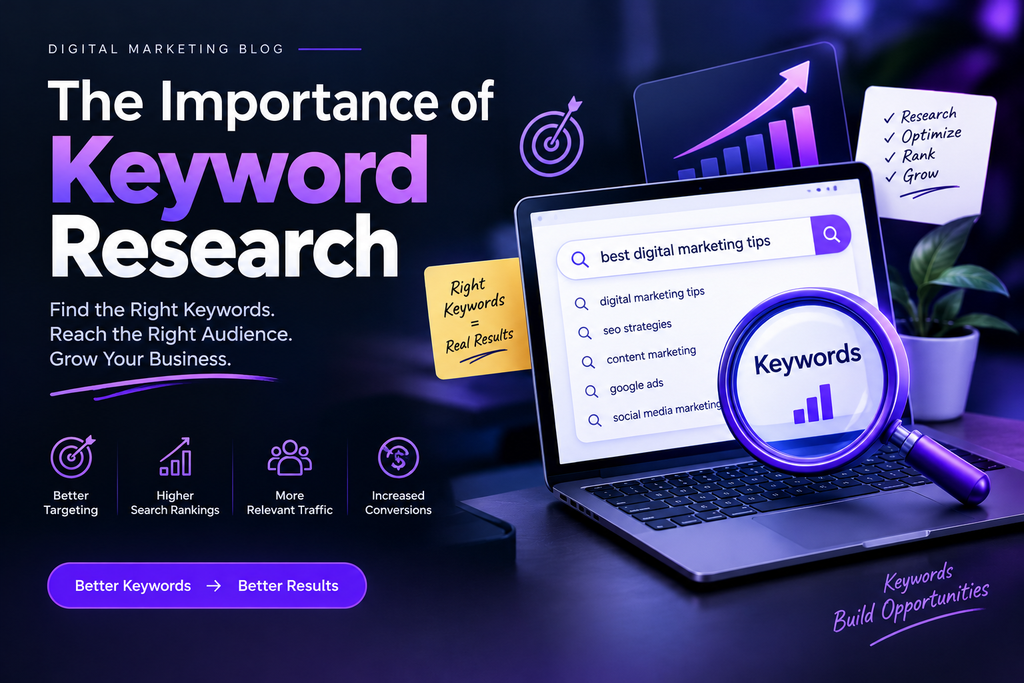
The Importance of Keyword Research in Digital Marketing
Introduction
The Importance of Keyword In today’s digital world, having a website is not enough to attract visitors. Businesses need to understand what people are searching for online and create content that matches their needs. This is where keyword research becomes important. Keyword research is one of the basic and essential parts of digital marketing, especially Search Engine Optimization (SEO).
Keyword research helps businesses discover the words and phrases people type into search engines like Google. By using the right keywords, businesses can improve their website visibility, attract the right audience, and increase organic traffic. Whether you are a beginner in digital marketing, a blogger, or a business owner, understanding keyword research can help you build a stronger online presence.
What Is Keyword Research?
Keyword research is the process of finding and analyzing the words and phrases that people use when searching for information, products, or services online. These keywords help digital marketers understand what their target audience wants to know.
For example, someone looking for a digital marketing course might search for phrases such as “best digital marketing course,” “digital marketing course for beginners,” or “learn digital marketing online.”
By identifying these search terms, marketers can create useful content that answers users’ questions.
Keyword research is not only about finding popular words. It also involves understanding the searcher’s intention, checking keyword competition, and selecting terms that match the goals of a website.
Why Is Keyword Research Important in Digital Marketing?

Keyword research plays an important role in helping businesses reach their target audience. Here are some of its major benefits.
1. Improves Search Engine Rankings (The Importance of Keyword)
One of the main benefits of keyword research is that it helps improve a website’s visibility on search engines. When you understand which keywords your audience uses, you can include them naturally in your website content, headings, page titles, and descriptions.
Search engines use many factors to understand and rank web pages. Relevant keywords help search engines understand the topic of your content, but rankings also depend on content quality, website usability, competition, and other factors.
For example, if you write a blog about SEO tips, using relevant phrases such as “SEO tips for beginners” can help search engines understand your topic.
2. Helps Attract the Right Audience (The Importance of Keyword)
Getting website visitors is useful, but attracting people who are genuinely interested in your content is even more important.
Keyword research helps you understand what your potential customers are looking for. This allows you to create content that matches their needs and interests.
For example, a person searching for “buy running shoes online” is likely looking to purchase a product. Someone searching for “how to choose running shoes” may be looking for information before buying.
Understanding this difference helps businesses create content that serves the right audience at the right time.
3. Increases Organic Website Traffic (The Importance of Keyword)
Organic traffic refers to visitors who reach your website through unpaid search engine results.
Keyword research helps identify search terms that people use regularly. Creating helpful, relevant content around these terms can improve your chances of attracting organic visitors.
For example, a blog targeting the phrase “digital marketing tips for small businesses” may attract business owners looking for affordable ways to promote their services.
Unlike paid advertising, organic search traffic does not require paying for every click. However, SEO takes time, and ranking for a keyword is never guaranteed.
4. Helps Understand Search Intent (The Importance of Keyword)
Search intent means the main reason behind a person’s search query. Understanding search intent is essential for creating content that satisfies users.
There are four common types of search intent:
- Informational intent: Users want to learn something, such as “What is SEO?”
- Navigational intent: Users want to find a specific website, such as “Facebook login.”
- Commercial intent: Users are researching options before making a decision, such as “best SEO tools.”
- Transactional intent: Users are ready to take action, such as “buy website hosting.”
When marketers understand search intent, they can create the right type of content for each keyword. This improves the user experience and makes digital marketing more effective.
5. Helps Create Better Content (The Importance of Keyword)
Content marketing and keyword research work together. Keyword research gives marketers ideas about what their audience wants to read, watch, or learn.
By analyzing relevant search terms, you can discover new blog topics, frequently asked questions, and common customer problems.
For example, if people frequently search for “how to improve Instagram engagement,” you can create a detailed blog explaining practical ways to improve engagement.
This approach helps you produce useful content instead of guessing what your audience might find interesting.
Types of Keywords in Digital Marketing
Understanding different types of keywords can help you create a better SEO strategy.
Short-Tail Keywords
Short-tail keywords usually contain one or two words. Examples include “SEO,” “marketing,” and “web design.”
These keywords often have broad meanings and can attract a wide audience. However, they may have high competition and unclear search intent.
Long-Tail Keywords
Long-tail keywords are more specific search phrases, such as “SEO tips for small business websites.”
They may have lower search volume than broad keywords, but they often reveal a clearer user need. This can make them useful for targeted content and specific audiences.
Local Keywords
Local keywords include a location or indicate that the user wants a nearby service. Examples include “digital marketing agency in Kerala” and “SEO services in Tirur.”
These keywords are useful for businesses that serve customers in particular locations.
Branded Keywords
Branded keywords include the name of a company, product, or brand. For example, someone might search for a specific company’s digital marketing services.
Businesses can monitor branded searches to understand how people discover and look for their brand online.
How to Conduct Keyword Research
Keyword research can be completed through a simple step-by-step process.
Step 1: Understand your target audience.
Identify who your audience is, what problems they face, and what information they need. This will help you discover relevant search terms.
Step 2: Brainstorm keyword ideas.
Write down words and phrases related to your business, products, services, or blog topics. You can also explore Google’s autocomplete suggestions and related searches.
Step 3: Use keyword research tools.
Tools such as Google Keyword Planner, Google Trends, and other SEO platforms can help you discover keyword ideas and evaluate search demand and competition.
Step 4: Analyze search intent.
Search for each keyword on Google and review the results. Observe whether the top pages are blog posts, product pages, guides, or service pages. This helps you understand what users expect to find.
Step 5: Check competition and relevance.
Choose keywords that are relevant to your website and realistic for your current level of authority. Consider search volume, competition, and the usefulness of the topic to your audience.
Step 6: Create optimized content.
Use your selected keywords naturally in your title, introduction, headings, URL where appropriate, and meta description. Focus on providing valuable information rather than repeating the same keyword unnecessarily.
Best Keyword Research Tools (The Importance of Keyword image
Several tools can help digital marketers find and analyze keywords.
- Google Keyword Planner: Helps discover keyword ideas and estimates of search volume, particularly for advertising research.
- Google Trends: Shows how interest in a search term changes over time and across locations.
- Google Search Console: Helps website owners understand which search queries generate impressions and clicks for their websites.
- Ahrefs: Provides keyword research and competitor analysis features.
- Semrush: Offers keyword analysis, competitor research, and other SEO tools.
Beginners can start with free tools and gradually explore paid tools as their needs grow.
Common Keyword Research Mistakes to Avoid
Although keyword research is useful, some mistakes can reduce its effectiveness.
- Choosing keywords only because they have high search volume.
- Ignoring search intent and creating the wrong type of content.
- Targeting highly competitive keywords without considering website authority.
- Stuffing keywords unnaturally into blog posts.
- Ignoring long-tail and local keywords.
- Forgetting to review keyword performance and update content.
Avoiding these mistakes helps you build a more natural and sustainable SEO strategy.
Conclusion
Keyword research is an essential part of digital marketing because it helps businesses understand their audience, create relevant content, improve search visibility, and attract potential customers. It also supports content planning, SEO strategies, and online business growth.
By choosing relevant keywords, understanding search intent, and using reliable research tools, digital marketers can create content that answers real questions and provides value to users.
For beginners, the best approach is to start with a clear topic, identify relevant keywords, analyze the search results, and create helpful content around the audience’s needs. Successful keyword research is not just about ranking on Google; it is about connecting the right content with the right people.
If you Want Leran More CONTACT